

The year 1918 marked a pivotal moment in global history with the occurrence of the Spanish Flu, a devastating influenza pandemic that swept across the world, leaving an indelible mark on societies and healthcare systems. However, contrary to its name, the Spanish Flu did not originate in Spain. The exact origins of the virus remain elusive, with theories pointing to the trenches of World War I, where close quarters and stressed immune systems facilitated its rapid transmission. The close living conditions of soldiers provided an ideal breeding ground for the virus.
The global spread of the virus was exacerbated by the movement of troops during World War I. As soldiers traveled across continents, the virus piggybacked on their journeys, infiltrating communities worldwide. The lack of awareness about the virus and inadequate public health measures allowed it to spread with alarming speed.
The Spanish Flu exhibited symptoms typical of influenza, such as fever, cough, and fatigue. However, what set it apart was its unprecedented severity, particularly among young, healthy adults. Unlike most influenza strains that disproportionately affect the very young and elderly, the Spanish Flu proved exceptionally lethal to those in the prime of their lives.
The virus caused a rapid and severe cytokine storm, an immune system overreaction, leading to respiratory failure and, in some cases, death. The high mortality rate, especially among the young and robust, contributed to the global impact of the pandemic.
The Spanish Flu, one of the deadliest pandemics in recorded history, infected approximately one third of the world’s population and claimed the lives of an estimated 50 million people -depending on the source it may arrive to 100 million-. Its swift and widespread transmission overwhelmed healthcare systems, leading to shortages of medical personnel, hospital beds, and essential supplies.
The pandemic placed immense pressure on medical professionals, who were grappling with a highly contagious and unpredictable virus. Hospitals were inundated with patients, creating a dire need for makeshift treatment centers to accommodate the unprecedented caseload.
The Spanish Flu had profound social and economic repercussions. The loss of a significant portion of the global workforce, combined with the strain on healthcare systems, led to disruptions in various industries. Businesses struggled to operate amidst the absence of healthy workers, and economic productivity plummeted.
Social life was severely curtailed as governments implemented stringent measures to curb the spread of the virus. Public gatherings were restricted, schools and universities were closed, and even basic services were affected. The pandemic induced fear and uncertainty, permeating every aspect of daily life.
In the absence of a vaccine or effective antiviral medications, public health measures became the primary tools to contain the spread of the virus. Quarantine, isolation, good personal hygiene, use of disinfectants, and limitations on public gatherings were among the strategies employed.
However, the effectiveness of these measures varied widely. Some communities implemented stringent measures early on, experiencing lower infection rates, while others faced devastating outbreaks due to delayed or insufficient responses.
The Spanish Flu, like most influenza pandemics, eventually subsided. The reasons behind its decline remain a subject of debate among historians and scientists. Some attribute it to the development of herd immunity, while others point to the virus mutating into a less virulent form.
The virus left an enduring legacy, influencing public health strategies, medical research, and societal resilience. The pandemic underscored the importance of international cooperation in managing global health crises, prompting the establishment of organizations like the World Health Organization (WHO).
The sickness also accelerated advancements in virology and vaccine development. Subsequent influenza pandemics, such as the H1N1 pandemic of 2009, drew on the lessons learned from the Spanish Flu to implement more effective response strategies.
The Spanish Flu (1918) and COVID-19 share global impact, high transmission rates, and strains on healthcare and economies. Noteworthy differences include age demographics, with the Spanish Flu affecting young adults and COVID-19 showing severity in older populations. Advances in medical science allowed for rapid COVID-19 vaccine development, a stark contrast to the Spanish Flu era. The information landscape has transformed, with instant communication playing a crucial role in COVID-19 awareness. Unprecedented global collaboration characterized the COVID-19 response, highlighting progress since the Spanish Flu. Both pandemics underscore the evolving challenges of infectious diseases. Comparing with historical pandemics like the Black Death or the HIV/AIDS crisis, COVID-19’s rapid vaccine development and global response stand out, reflecting advancements in medical science and international collaboration over time.
Summing up, the Spanish Flu of 1918 stands as a watershed moment in the history of pandemics, leaving an indomitable mark on societies and public health practices. Its impact on global health, social structures, and economies underscores the need for robust and coordinated responses to emerging infectious diseases. As the world faces new challenges, the lessons from the Spanish Flu continue to inform our approach to safeguarding public health and mitigating the devastating effects of pandemics.
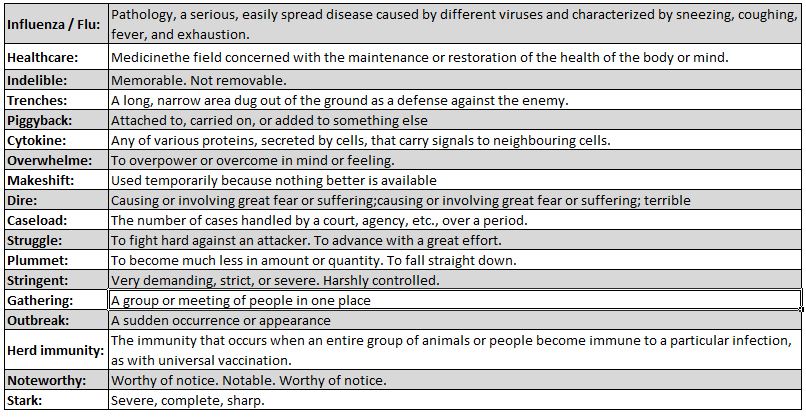
Vocabulary:
How much did you learn about the Spanish flu? Check-it out here!:
 El espacio de JAGAYALA