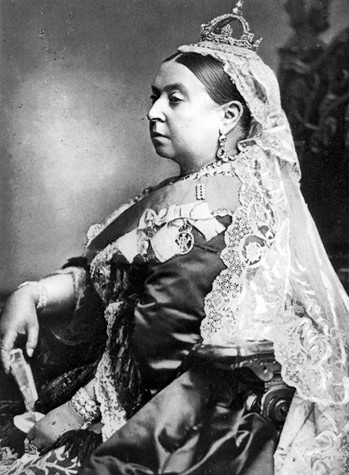
The Victorian era can be considered as the zenith of the Industrial Revolution and the British Empire. This period was characterised by major changes in politics and culture and it can be delimited by the reign of Queen Victoria from 1838 to 1901. As the queen´s ruler-ship lasted 64 years, it is so far as the second longest regime ever in England after Elizabeth II, Victoria’s great-great-granddaughter. It can be divided into three different periods:
- From 1838 until 1851 is a period of growth. Industrialisation grew more and more.
- In 1851 the Great Exhibition in London started the second and golden period, which finished in 1873. England became the leading industrial country in the world. This period witnessed crucial social changes.
- Finally, from 1873 until 1901 is the last Victorian period. During this phase England lost its supremacy. On the other hand, the society, labour movement and Ireland problems sharpened.
The population grew from approximately 25 million in 1801 to almost 40 million people at the end of the century. In the early 19th century, the most of people in Great Britain lived in the countryside. Goods and people were transported by horses, communications were scarce and barely the half people could read and write. Nevertheless, in 1880 the rural population was only 10% of the total working population and the lack of food was replaced with imports. At the end of Victoria’s reign, changes were significant: electric streetlights in major cities, telegraph, steamships, city dwellers, subway trains, railway network settlement, compulsory education and women legal status improvement. The railway revolution brought the different corners of the country closer together, allowing the transportation of materials and people over great distances in a short time in little more than 60 years, with a huge increase in the commercial, transport, mining and industrial sectors.
However, social problems caused by industrialisation became more and more important: overcrowded cities caused lack of hygiene, or more specifically the London Great Stink in 1858.
Regarding to society, middle class grew notoriously from 1851 and became very important. Its opinions, behaviour, moral values, likes, etc… were adopted by upper and lower classes. Society in Victorian times was characterized by excessive vigilance of customs, subject to morality and discipline, with rigid prejudices and severe prohibitions. Victorian values could be defined as puritanical, emphasizing at the time the values of savings or the eagerness to work. On the other hand, males dominated the scene both in public spaces and in privacy. Women were due to private places, with a status of submission and care for their children and the home. The social rejection towards vice also translates into sex, related to low passions and its animal character derived from meat. Therefore, chastity was a virtue that had to be guarded and watched over. In this sense, another clear example was the conviction for homosexuality of the Irish writer Oscar Wilde.
By the end of Victorian era, almost the half of world population was under queen Victoria’s governments. Victorianism was, for the most part, a period of political stability and a certain reformism, tending increasingly toward liberalism. This, despite the fact that Great Britain was at war for practically the entire period. The following video is quite interesting for illustrating this period:


 El espacio de JAGAYALA